At the top: cap and crown
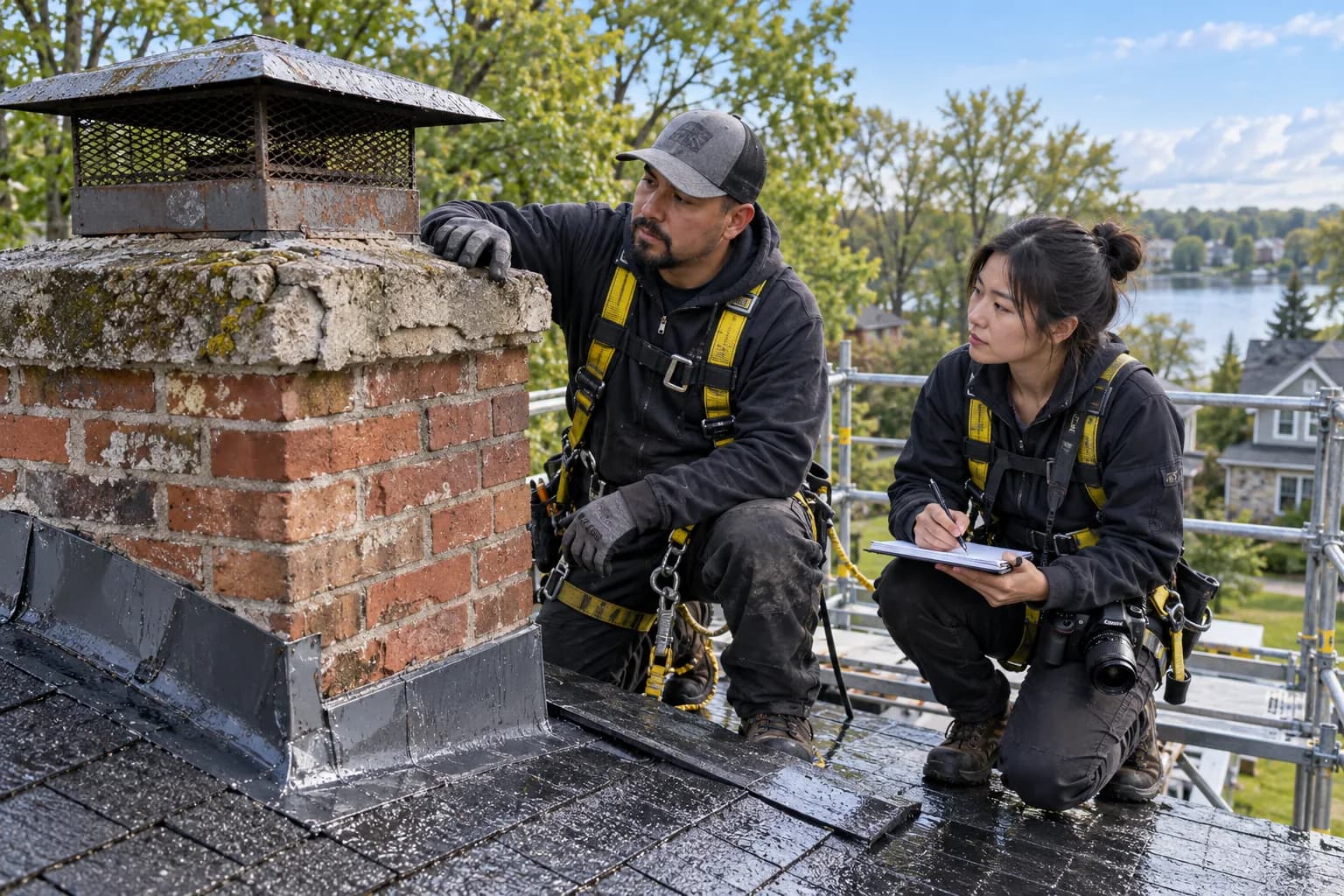
A cap is the termination component that can help limit rain and animal entry while allowing exhaust to leave. A masonry crown is the water-shedding top surface around flue openings. On a factory-built chimney or chase, the top assembly may use manufacturer-specific parts. A new cap cannot repair a cracked crown or failed roof flashing.
Ask a contractor to label the affected part in a photograph. Confirm fit and compatibility before approving a replacement.
Inside: liner and damper
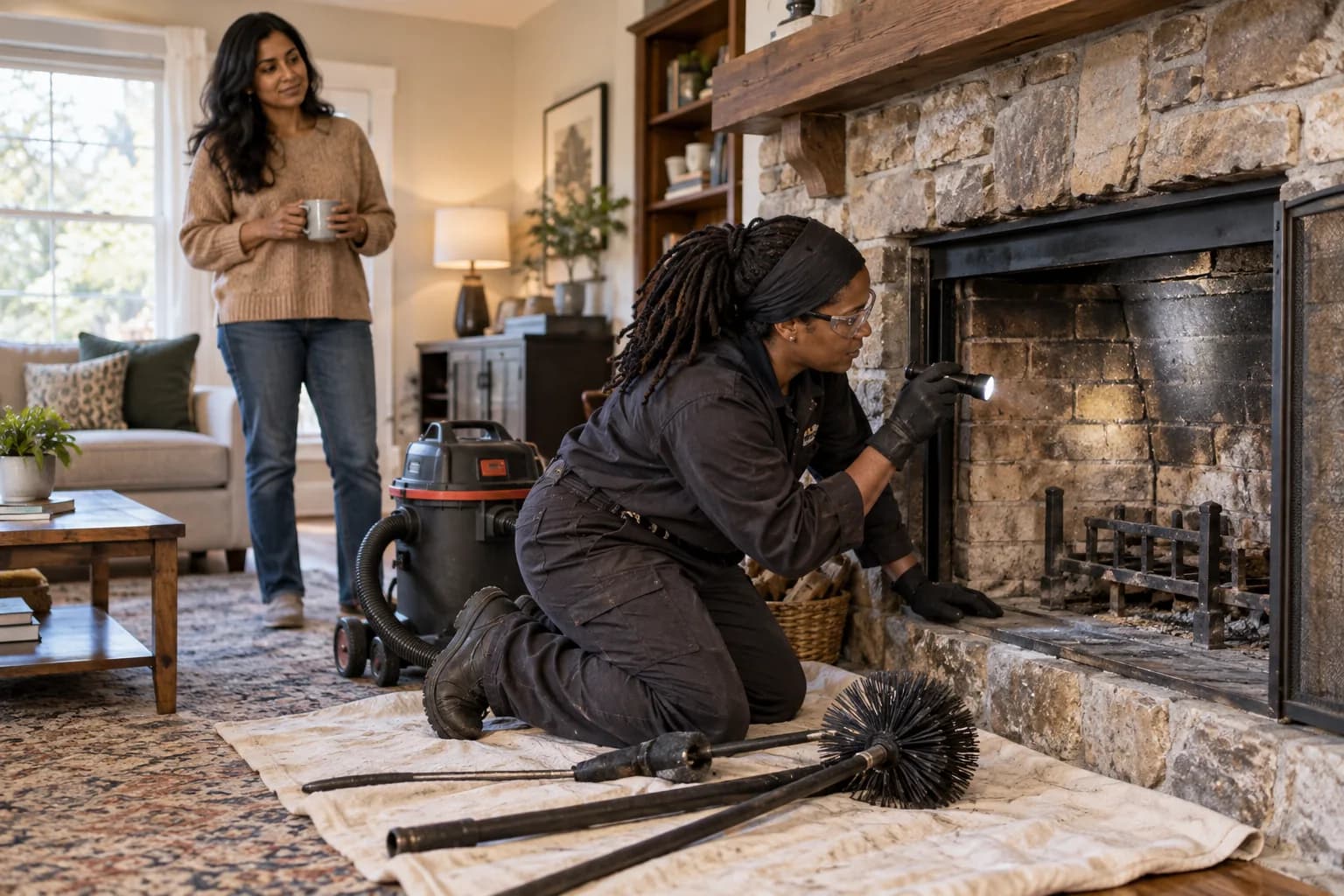
The liner forms the vent passage for combustion products. Its material, size and connections must suit the appliance and fuel. The damper controls the fireplace opening or flue passage in certain systems; it is not a substitute for a sound liner. A chimney may contain multiple separate flues serving different appliances.
Ask whether a camera scan or other inspection method is needed to view hidden liner sections. Get the material, dimensions and connection details in writing if replacement is recommended.
Where the chimney meets the house
Flashing manages water at the roof-to-chimney joint. Masonry joints, brick and a firebox have separate roles. Water can enter at one point and stain another; request a diagnosis rather than a generic sealant quote.
Keep the component photographs and repair records. They make future maintenance and a home sale easier to explain.
Put the guide to work
Give each chimney company the same description and ask for a written scope. Compare providers by location and recorded services.
Find chimney sweep companies